Books
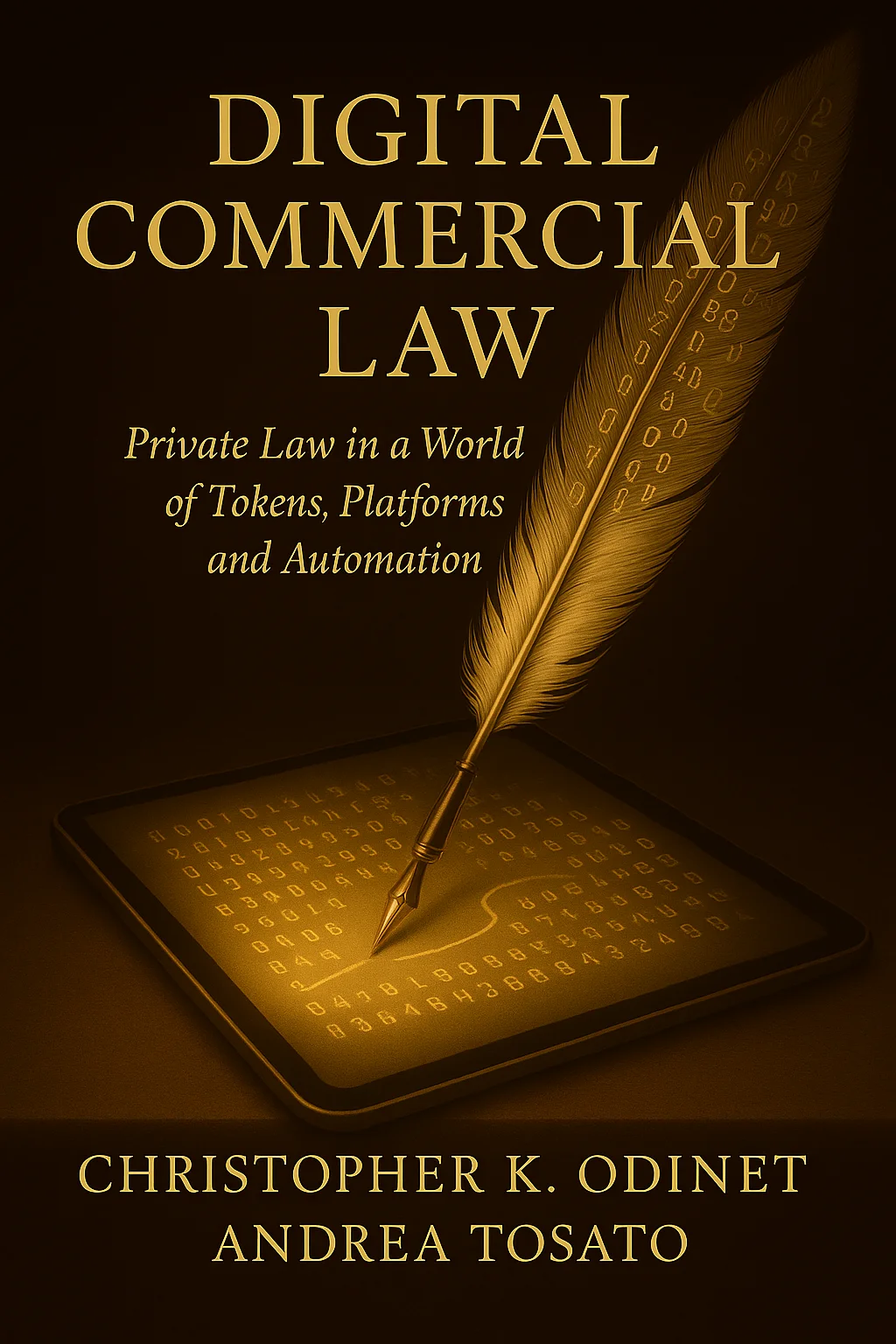
About the Book
Digital assets are everywhere. Bitcoin, stablecoins, non-fungible tokens, tokenized securities, and other blockchain-based instruments have moved from the fringes of technology into the mainstream of global commerce. Yet while the public debate has focused almost entirely on regulatory questions, the basic private law framework governing commercial transactions in digital assets has remained largely overlooked.
This book introduces the concept of digital commercial law: the body of rules that determines how digital assets are created, transferred, encumbered, and used as collateral in commercial practice. Rather than proposing a unified theory of digital assets, the book adopts an applied, transaction-centered approach. Each chapter examines a distinct commercial use of digital assets and identifies the private law rules that govern it, revealing how existing legal frameworks apply, where they fall short, and what reforms are needed.
A central theme of the book is the flexibility fallacy: the widespread assumption that existing commercial law statutes are flexible enough to accommodate digital assets without amendment. The book demonstrates that this assumption is often incorrect and that targeted legislative reform is both necessary and achievable. The analysis pursues three aims: to map the private law architecture that governs digital asset transactions, to identify the doctrinal gaps and uncertainties that create legal risk for market participants, and to evaluate the reform initiatives that have sought to address them.
Chapter Overview
Part I: Foundations lays the groundwork for the rest of the book. Chapter 1 introduces the concept of digital commercial law and explains why a transaction-centered approach to digital assets is both necessary and overdue. Chapters 2 through 4 examine the foundational questions that underpin all digital asset transactions: the legal nature of digital assets and whether they can be objects of property rights, the process of tokenization and how off-chain assets are represented on distributed ledgers, and the emerging legal and practical frameworks for digital asset custody.
Part II: NFTs and Debt Tokens turns to specific transactional contexts. Chapter 5 explores how non-fungible tokens have transformed the market for creative works and the private law questions that arise from their creation, sale, and licensing. Chapter 6 examines the use of digital assets in bankruptcy claims trading, an area where blockchain technology has the potential to bring transparency and efficiency to a traditionally opaque market.
Part III: Tokenization of Real Estate and Stablecoins addresses the intersection of digital assets and financial transactions. Chapter 7 analyzes the tokenization of real estate, tracing how fractional ownership interests in property are created, transferred, and financed through blockchain-based instruments. Chapter 8 examines stablecoins, exploring whether these instruments function as a new form of private money and how existing commercial law frameworks apply to their issuance and circulation.
The Conclusion draws together the themes of the preceding chapters and argues that the development of a coherent digital commercial law is not merely a technical exercise but a precondition for the responsible integration of digital assets into the broader legal and economic order.
Foundational Scholarship
The book develops themes explored in the following articles and essays:
- The Moneyness of Stablecoins — Yale Law Journal (forthcoming 2026)
- Debt Tokens — University of Pennsylvania Law Review, vol. 173 (2025)
- Digital Assets and the Property Question — Florida Law Review, vol. 78 (forthcoming 2026)
- The Private Law of Stablecoins — Arizona State Law Journal, vol. 54 (2022)
- Crypto in Real Estate Finance — Alabama Law Review, vol. 75 (2023)
- Commercial Law Intersections — Hastings Law Journal, vol. 72 (2021)
Publication Information
Publisher: Oxford University Press
Publication date: 16 June 2026
Format: Hardcover (also available as e-book)
Pages: 352
ISBN: 9780197758625
Price: $39.95 (hardcover)